
Finley Lang · 25 September 2026
Shifting Dynamics of Referral Pathways in Solo-Managed Digital Projects
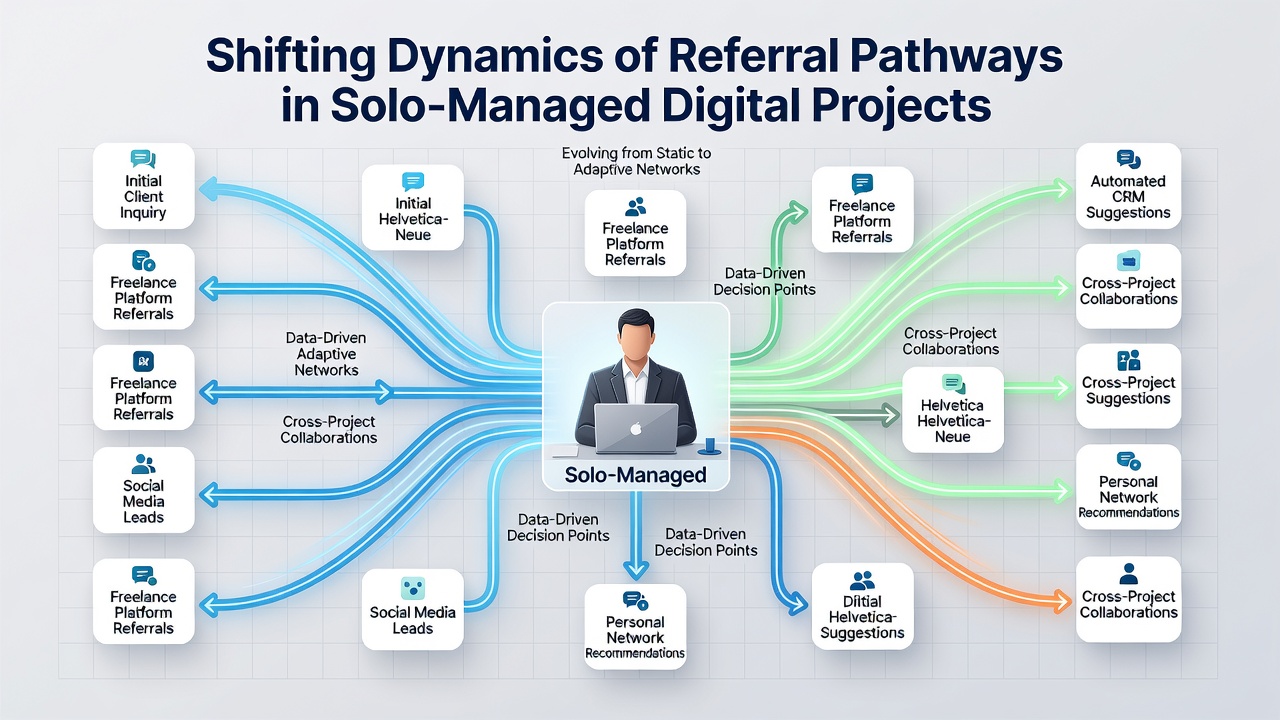
Referral pathways in solo-managed digital projects have undergone measurable changes as independent operators adapt to evolving platform algorithms, data privacy regulations, and client acquisition tools. Data from industry tracking services shows that direct client referrals still account for a substantial portion of project inflows, yet the routes through which those referrals travel have diversified since 2023. Observers note that solo practitioners now combine traditional word-of-mouth channels with structured digital tracking systems to maintain visibility across multiple touchpoints.
Core Components of Modern Referral Systems
Referral pathways consist of the sequence of contacts, platforms, and decision points that connect a new client to a solo operator. In practice these sequences often begin with an initial recommendation on professional networks, move through portfolio review sites, and conclude with direct messaging on encrypted channels. Research indicates that projects involving website development or content management systems rely on these layered routes more heavily than larger agency-led initiatives because solo operators lack dedicated sales teams. Figures from project management software providers reveal that referral-driven leads convert at higher rates when the initial contact includes verifiable case studies or performance metrics shared through shared documents rather than static links.
Platform Algorithm Updates and Their Effects
Algorithm adjustments on major professional networks have altered how recommendations surface in feeds. Since early 2025 updates have prioritized content that demonstrates measurable outcomes over general endorsements, which means solo operators must document project results in formats that platforms can index. Those who maintain consistent project logs report steadier referral volumes because their updates appear in relevant search results for longer periods. Data shows that operators using structured tagging systems for past projects experience fewer interruptions when platforms revise their visibility rules.
Meanwhile privacy regulations in multiple jurisdictions have limited the automatic sharing of contact information across services. Solo managers now implement consent-based forms that record permission before any referral data moves between tools. This shift has extended the time between initial contact and project start, yet conversion rates remain stable when operators follow up within defined timeframes.
Integration of Tracking Tools in Solo Workflows
Independent operators increasingly adopt lightweight analytics platforms that record referral sources without requiring enterprise-level infrastructure. These tools connect form submissions on personal sites to project management boards, creating a single view of how each lead arrives. Studies conducted by digital economy research groups demonstrate that such integrations reduce time spent on manual follow-up by consolidating communication threads. Operators who began using these systems before September 2026 report smoother handoffs between initial inquiry and contract signing because timestamps and source tags remain attached throughout the process.
Regional Variations in Referral Practices
Patterns differ across geographic areas according to local digital infrastructure and client expectations. In North American markets, operators frequently combine recommendations from industry forums with direct outreach through niche Slack communities. European practitioners more often route referrals through verified directories maintained by professional associations. Data compiled by the Organisation for Economic Co-operation and Development highlights that these regional preferences influence the speed at which projects move from referral to agreement, with directory-based systems showing longer evaluation periods but higher repeat engagement. Australian digital project reports indicate similar trends where operators leverage government-supported small business networks to supplement private referrals.
Future Trajectory Through Late 2026
Projections based on current adoption rates suggest continued growth in hybrid referral models that blend automated tracking with personal verification steps. Solo operators who maintain detailed records of past project outcomes position themselves to benefit from both algorithmic recommendations and direct introductions. Evidence from ongoing surveys of independent digital workers points to sustained interest in consent-driven data sharing as regulatory frameworks expand. Those who adapt their documentation practices accordingly maintain consistent lead flow even as platform policies continue to evolve.
Conclusion
Referral pathways in solo-managed digital projects now operate through interconnected digital and interpersonal channels that require deliberate tracking and compliance measures. Information from multiple regulatory and research bodies shows that operators who align their documentation and consent processes with current platform and legal standards sustain effective client acquisition. The patterns observed through September 2026 indicate that structured yet flexible systems will remain central to maintaining steady project pipelines for independent practitioners.